
Go Deep Like a Pinyon Pine

Paul DurbinLead Pastor
June 16, 2026

2 Minute Read

The blue spruce is gorgeous. Tall, that unforgettable color, impressive in every way. But here's the thing—its roots only go down about 12 to 18 inches. So when a real wind hits, over it goes.

Meanwhile, the scrubby little pinyon pine is hanging off the edge of the Grand Canyon like it's no big deal. Why? Because it sends a taproot way down deep. It's not flashy. It's not tall. But it's anchored.

I think a lot of us are trying to grow as blue spruces. We spread our spiritual roots wide—sampling every podcast, every trend, every new idea that floats by. And then we wonder why the first hard wind knocks us flat. Paul saw this coming. He wrote, "Just as you received Christ Jesus as Lord, continue to live your lives in him, rooted and built up in him." Rooted. Down. Deep.

Going deep isn't glamorous. It looks like opening your Bible again. Praying when you don't feel like it. Showing up to community when staying home would be easier. It's quiet, steady, unimpressive work. But it's the kind of work that holds you up when the canyon wind starts howling.

So today, instead of spreading wider, go deeper. Just a little. Jesus is worth the dig.

167 | How Can I Grow Toward Greater Christ-Like Maturity? P2

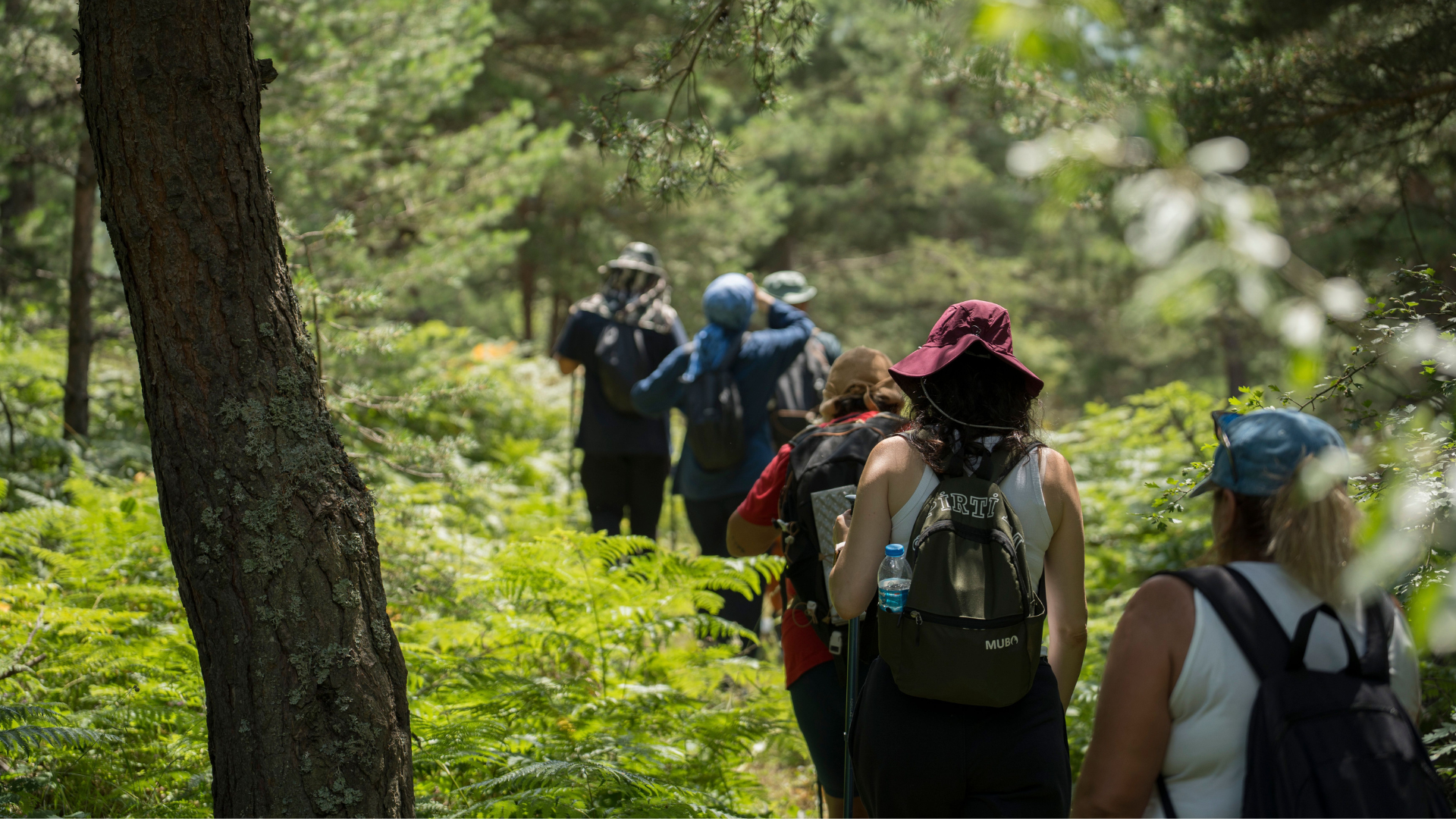
In part two of his teaching on Christ-like maturity, Pastor Paul Durbin walks Belay'ers through Colossians 1:24–2:7 to unpack three more deliberate practices that grow us into spiritually mature followers of Jesus. He shows how spiritual discernment, continual growth, and overflowing thankfulness move us past fine-sounding arguments and shallow faith into a deeply rooted life in Christ. Using the picture of a pinyon pine sending its taproot deep into rocky ground, Paul invites us to stop spreading wide and start going down—anchored in Jesus, who is all the treasures of wisdom and knowledge.
Paul DurbinLast Sunday
Up Next
From this Collection: Blog
June 16, 20261 Minute Read
Don't Fall for Fine-Sounding Arguments
Bank tellers don't spot counterfeit bills by studying every fake one out there. They spot them by knowing the real thing so well that anything off feels wrong instantly. That's spiritual discernment. Paul warned the Colossians—and us—about "fine-sounding arguments." Notice he didn't say bad-sounding arguments. The dangerous ones sound good. They sound smart, spiritual, even biblical. They're the ones that quietly add something to Jesus: Jesus plus rules, Jesus plus rituals, Jesus plus the latest trending voice, Jesus plus your performance. But the gospel is breathtakingly simple. "Christ Jesus came into the world to save sinners." That's it. I'm a sinner, I need Jesus, and He did everything required. Jesus didn't pay 80% and leave you to scrape together the rest. Here's the encouraging part: you don't have to become a heresy hunter or memorize every false teaching out there. You just have to keep getting to know Jesus. Read His Word. Sit with His Spirit. Walk with His people. The more familiar you are with the real Jesus, the quicker you'll feel it when something is just a little off. Stay close to Him this week. Counterfeits lose their pull when you know the real thing.counter
Currently Reading
June 16, 20262 Minute Read
Go Deep Like a Pinyon Pine
The blue spruce is gorgeous. Tall, that unforgettable color, impressive in every way. But here's the thing—its roots only go down about 12 to 18 inches. So when a real wind hits, over it goes. Meanwhile, the scrubby little pinyon pine is hanging off the edge of the Grand Canyon like it's no big deal. Why? Because it sends a taproot way down deep. It's not flashy. It's not tall. But it's anchored. I think a lot of us are trying to grow as blue spruces. We spread our spiritual roots wide—sampling every podcast, every trend, every new idea that floats by. And then we wonder why the first hard wind knocks us flat. Paul saw this coming. He wrote, "Just as you received Christ Jesus as Lord, continue to live your lives in him, rooted and built up in him." Rooted. Down. Deep. Going deep isn't glamorous. It looks like opening your Bible again. Praying when you don't feel like it. Showing up to community when staying home would be easier. It's quiet, steady, unimpressive work. But it's the kind of work that holds you up when the canyon wind starts howling. So today, instead of spreading wider, go deeper. Just a little. Jesus is worth the dig.deeper
June 12, 20262 Minute Read
The 50-Year-Old Pot of Soup
There's a Chinese cooking tradition called master stock—lu shui. It's a soup base that never gets thrown out. Some restaurants have pots that have been simmering, in some form, for 50 years. The mystery of the flavor isn't a new spice. It's the old one. The ancient one. Consider that image as you think about spiritual maturity. We live in a world that sells us a hundred new hacks every week. New morning routine. New brain trick. New five-step plan. And somewhere along the way, we start to believe that growing up in Jesus should work the same way—fast, fresh, and trending. But Paul says the mystery is this: "Christ in you, the hope of glory." That's it. The secret ingredient isn't new. He's been around since before time started. He's already seen how the story ends. And He's the one doing the simmering inside of you. So here's the invitation today. Stop chasing the next shiny thing. Sit down at the same old pot. Open the Word. Talk to Jesus like He's actually in the room—because He is. Let His Spirit keep doing the slow, deep work that no shortcut can replicate. You're not behind. You're simmering. And the flavor that's coming out of your life is exactly what the people around you are hungry for.soup
June 12, 20262 Minute Read
Reframing the Hard Stuff
When Paul wrote, "I rejoice in what I am suffering for you," he wasn't chained to a desk—he was chained to a guard. And yet his first words weren't, "Get me out of here." They were words of joy. That's not normal. That's mature. In this life, we will have times of suffering. We don't really get to vote on that. What we do get to choose is whether we walk through it bitter or joyful. Bitter suffering complains, blames, and sets up camp in a bad mood. Joyful suffering says, "Jesus walked through hard things too. Maybe this is where I get to know Him a little better." That's not denial. That's not pretending the pain isn't real. Paul still prayed three times for his thorn to be removed. Jesus Himself asked if the cup could pass. We can do both—pray hard for breakthrough and receive the moment as holy ground at the same time. So if you're in a hard season right now, try this. Don't just ask, "God, get me out." Ask, "God, what do You want me to see about You while I'm in here?" That one shift can turn a prison cell into a classroom. Jesus isn't watching from the finish line. He's right there in the cell with you. And what He's growing in you might be exactly what someone else needs to see.reframe
June 6, 20263 Minute Read
5 Stages of Marriage
What Stage Are You In? When Patty and I said "I do," nobody handed us a roadmap. We anticipated that marriage would be a steady climb upward—two people who loved each other simply loving each other more as the years rolled by. But marriage isn't a straight line. It's a journey with distinct stages, and every couple moves through them. The good news? When you know what stage you're in, you stop panicking when things get difficult. You realize you're not broken—you're just in a season. And every season has a purpose. Here are the five stages most marriages experience. 💕 Honeymoon Stage This is the magical beginning, when love feels effortless and your partner can do no wrong. Emotions run high and the connection feels electric. Head over heels in love Passionate romance and starry-eyed wonder Powerful chemistry between you Everything about your partner feels perfect "I am my beloved's, and my beloved is mine." — Song of Solomon 6:3 😬 Reality Stage The fog of romance lifts and real life sets in. You start noticing your partner's quirks and wondering if you really knew them at all. Usually hits a few weeks after the honeymoon The "What was I thinking?" moment arrives A shift from delight to disillusionment Little things start to bother you, and it feels like you have less in common than you thought "Love is patient, love is kind. It does not envy, it does not boast, it is not proud." — 1 Corinthians 13:4 🚦 Adaptation Stage This is the crossroads. You're faced with the reality that your spouse isn't exactly who you imagined—and neither are you. Now you have to decide what to do about it. Three paths open up in front of you: GO: Split up and go separate ways STATUS QUO: Stay together but live unhappily GROW: Choose to develop healthier ways of seeing each other "Why do you look at the speck of sawdust in your brother's eye and pay no attention to the plank in your own eye?" — Matthew 7:3 🌱 Transformation Stage For couples who choose to grow, real change starts happening. You stop trying to win and start trying to understand. Accept that you'll never see eye to eye on everything Consciously decide not to push each other's buttons Look at yourself more honestly and make real changes Struggle decreases, harmony increases "Be completely humble and gentle; be patient, bearing with one another in love." — Ephesians 4:2 🌳 Mature Love Stage This is the payoff for couples who stayed the course. Love feels deeper, richer, and more secure than ever before. You share a meaningful history together The qualities that first attracted you come back into focus Renewed connection—you feel closer than ever More harmony, and you genuinely like each other again A quiet pride in what you've built side by side "Though one may be overpowered, two can defend themselves. A cord of three strands is not quickly broken." — Ecclesiastes 4:12 A Final Word Wherever you find yourself today—honeymoon, reality check, or somewhere in the messy middle—don't lose heart. Marriage isn't meant to be easy; it's meant to make us more like Christ. The struggle isn't a sign your marriage is failing. It's often the very thing God uses to grow you both into something beautiful. If you're stuck, reach out. Talk to your spouse honestly. Find a mentor couple. The best marriages aren't the ones that avoid the hard stages—they're the ones that walk through them together. This article is based on a teaching Paul heard at a Responding to Relationships seminar.
June 4, 20262 Minute Read
Who did you GIFT this week?
What is GIFT? GIFT is a simple way to help Sundays at Belay continue to be welcoming and friendly. Greet Greet someone you've never met before. If they're new, welcome them and learn something about them. If they've been around a while and you just haven't met yet, introduce yourself. If they came alone, offer to sit with them. Introduce Introduce people to each other. Connect people who share something in common. Introduce a first-time guest to the pastor or a leader. Be the bridge between strangers and friends. Follow Up Follow up with someone you met recently. Call them by name. Pick up the conversation where it left off. Invite them into your circle of friends. Thank Thank someone who did something you appreciate. A simple "I love those songs!" to the worship leader. A “that was delicious” to whoever brought breakfast. A note of encouragement to a nursery worker. Ask a fellow Belayer, "Who did you GIFT this week?" Not many of us can do all four letters of GIFT every week. But if we each commit to just one a week (and ask each other about it) this simple plan can help Sundays at Belay continue to be a place of real belonging. Based on an article by Karl Vaters, https://karlvaters.com/friendlier-to-guests/
June 4, 20262 Minute Read
He Took the First Step
Reconciliation always takes two parties. One person can do everything in their power, but if the other doesn't respond, nothing changes. Anyone who's lived through a broken relationship knows this in their bones. Here's what wrecks me about the gospel: we were the ones who walked away. Paul says we were "alienated" and "enemies in our minds because of our evil behavior." That's strong language. And yet Colossians 1 doesn't say humanity finally figured it out, climbed high enough, prayed loud enough, or got religious enough to earn God's attention. It says He reconciled us. He moved first. He took the step. He gave His own body on the cross to close the gap we created. Think about that the next time you feel far from God. He's not standing across the canyon with arms folded, waiting for you to perform your way back. He already crossed. The blood of Jesus has already been shed. The hand is already extended. Your part is simply to receive it. And here's the beautiful ripple effect: because He moved toward us, we get to move toward others. That relationship you've been waiting on someone else to fix? Maybe you're the one who gets to be like Jesus this week. Maybe you take the first step. Maybe you send the text. Maybe you offer the hug before the words come. That's what people who are on belay do—we move first, because Someone moved first for us.reconcile
June 2, 20262 Minute Read
Who's Actually on Your Throne?
Who's actually on the throne of your heart right now? Most of us would quickly answer "Jesus." But if we slow down and really look, we might notice some other things sneaking up there. A political opinion. A favorite voice on a podcast. A career goal. A worry that runs on a loop in our minds. Even good things—family, ministry, hobbies—can quietly slide into the spot only Jesus is meant to fill. Paul tells the Colossians that Jesus is the image of the invisible God, the Creator of everything, the One who holds it all together. That's not someone you invite over for coffee. That's someone you build your whole life around. Jesus isn't looking to be a welcome guest who fits nicely into the life you've already arranged. He's after the center. The good news? You don't have to white-knuckle this. The same Jesus who deserves the throne also gives you the strength to keep Him there. His Spirit does the work in you. Your job is simply to keep saying yes—to keep climbing back onto the altar when you've crawled off, to keep returning to the center when you've drifted. So today, just ask the question honestly. Who's on the throne? And if it's not Jesus, you don't have to fix it alone. Just invite Him back to the seat that was always His.Throne
May 26, 20262 Minute Read
A Complaining Tongue Tells On Us
"A complaining tongue reveals an ungrateful heart." That one stings a little, doesn't it? It's simple, but it lands. Because if we're honest, most of us live in a culture where complaining is just how we talk. Reviews, ratings, group texts, break rooms—complaining is the background music of modern life. And the strange part is, it never actually makes us feel better. It just puts the worst thing front and center and keeps it there. Paul prays in Colossians 1 that we'd give "joyful thanks to the Father." Joyful thanks. Not polite thanks. Not religious thanks. The kind of gratitude that bubbles up because we actually see what God has done for us. He qualified us. He rescued us. He brought us into the kingdom of His Son. That's a lot to be grateful for before we even get to coffee in the morning. Here's a small experiment this week: every time you catch yourself starting to complain, pause and name one thing you're grateful for instead. Out loud, if you can. You'll be surprised how quickly your mood shifts—and how quickly the people around you notice. You can't complain and give thanks at the same time. One of them is going to win. Let it be gratitude.gratitude
May 26, 20262 Minute Read
What Used to Level You
The thing that wrecked you three years ago might not have the same power over you today. That's not because life got easier. It's because you got stronger. Paul prays in Colossians 1 that we'd be "strengthened with all power according to His glorious might so that we may have great endurance and patience." Notice he doesn't pray that the hard stuff would stop. He prays that we'd be the kind of people who can carry it differently when it comes. That's spiritual maturity. Not a life without setbacks, but a soul that's been quietly reinforced by the Spirit over time. The disappointment that used to take you weeks to recover from now takes days. The criticism that used to ruin your week now rolls off a little quicker. The setback that once made you want to quit—you're still standing. If you're in a hard season right now, don't miss this: God isn't wasting it. He's building something in you. Strength, power, and endurance aren't gifts He drops from the sky—they're grown in the middle of stuff that hurts. And one day, you'll look back and realize what used to level you doesn't anymore. That's grace doing its quiet work. Keep going. You're stronger than you were.
May 20, 20262 Minute Read
Turn and Keep Turning
Following Jesus is not about never stumbling. But it’s often about learning to turn back quickly. All of us mess up. We say things we should not say. We look at things we should not look at. We chase things that cannot give us life. We get selfish, distracted, proud, tired, or just plain foolish. That is not an excuse. It is just honest. But here is the good news: when we do stupid, we do not have to keep doing stupid. Repentance is not a one-time religious word we dust off when life falls apart. It is a daily movement of the heart. We turn from sin and turn toward Jesus. Then, when we drift again, we turn again. And then again. And then again. Not in panic. Not in shame. But in trust. David prayed, “Turn my heart toward your statutes, not toward selfish gain. Turn my eyes away from worthless things.” I love that because David knows he needs help. He is not pretending he can muscle his way into holiness. He is asking God to turn him from the inside out. That is where the path of purity really begins. Not with willpower. Not with pretending. Not with hiding. It begins by yielding to Jesus, the One who cleanses us, forgives us, and gives us His life. So today, if the Spirit shows you something, don’t run from Him. Turn toward Him. For more reflection, spend some time with the full sermon and study guide.Turn and Keep Turning
May 20, 20262 Minute Read
The Freedom of a Good Fence
Sometimes the thing that feels like a restriction is actually the thing that helps us run. That sounds backwards, doesn’t it? Most of us hear the word “freedom” and think it means no limits, no boundaries, nobody telling us what to do. But real life teaches us something different. A child on a playground without a fence often stays close to the teacher. But put a fence around that same playground, and suddenly the child runs, explores, climbs, laughs, and plays. That is a pretty good picture of God’s commands. God is not trying to steal life from us. He is not trying to shrink our joy. He is giving us guardrails so we do not drive our lives into the ditch. David says, “I run in the path of your commandments, for you have set my heart free.” That is not a trapped man talking. That is someone who has discovered that surrender to God leads to a deeper kind of freedom. So maybe the question is not, “What can I get away with?” Maybe the better question is, “What guardrails would help me become the person I actually want to be in Jesus?” That may mean a boundary with your phone, a habit, a relationship, your schedule, or what you let into your mind. Not because God is harsh, but because He is good. If you want to keep thinking about this, check out the full sermon and study guide on walking the path of purity.How Do We Stay on the Path of Purity?