Full of Grace and Truth

Paul Durbin • Lead Pastor
September 9, 2026

2 Minute Read

When I was about 12 years old, sitting on a couch in Montana with a Bible open in my lap, a verse I was studying for a Bible quiz club caught my attention: "The Word became flesh and made his dwelling among us… full of grace and truth." (John 1:14).

I didn't have the words for it back then, but something in my spirit knew that phrase mattered.

Grace and truth. Two things that felt almost like opposites.

Grace sounded like God just letting stuff slide. Truth sounded like God calling out every failure.

How could Jesus be full of both, all the time?

It took me years to see it. Grace and truth aren't opposites—they're the two ingredients of real love.

Grace says, "I love you exactly as you are."

Truth says, "And I love you way too much to leave you there."

Take either one away and what you're left with isn't love anymore. It's either license or legalism.

That's what makes Jesus so stunning. He never dilutes one to make room for the other. He gives us the full weight of grace and truth — every second and every conversation.

Which ingredient is harder for you to receive today—His grace, or His truth?
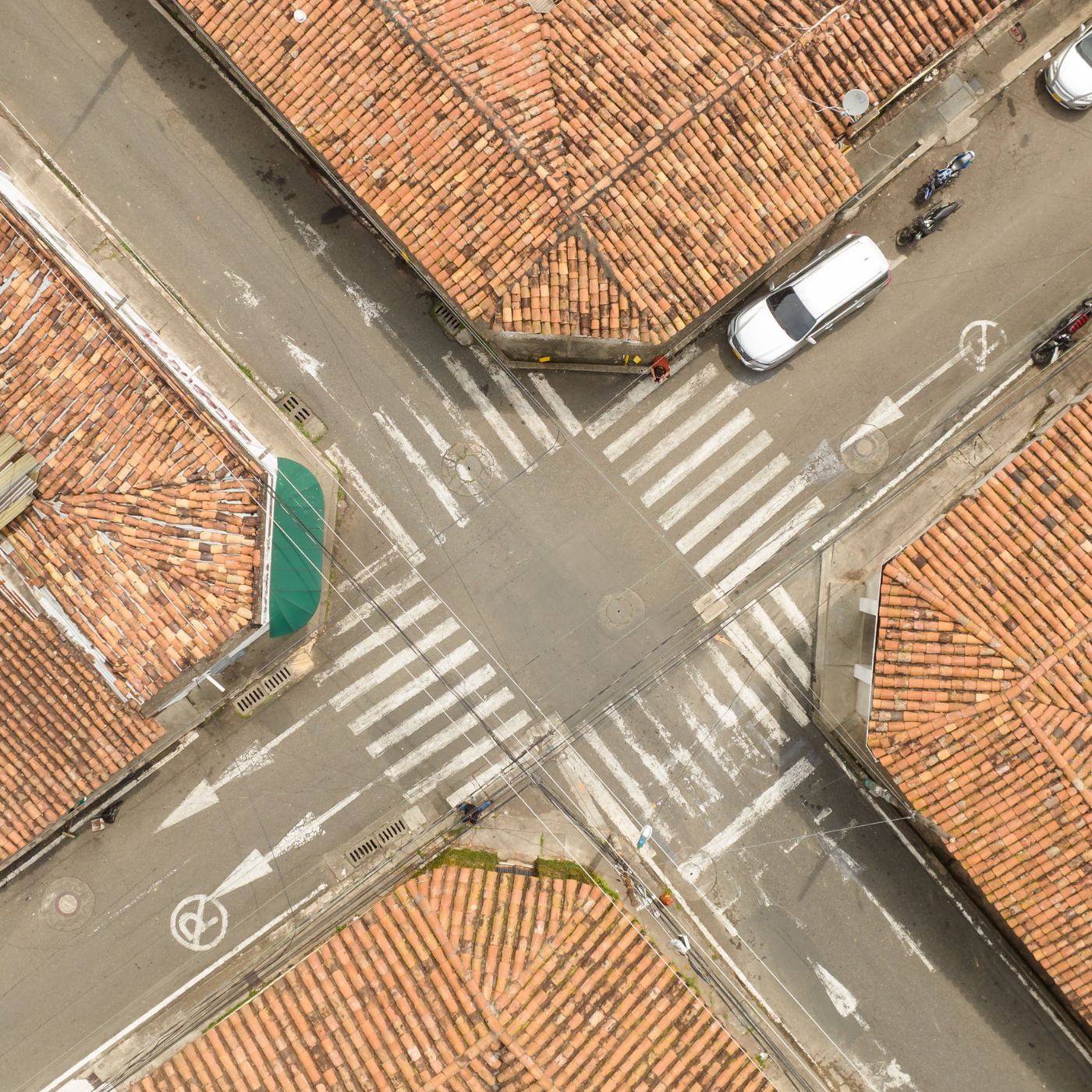
178 | Are You Loving From the Intersection of Grace and Truth?

In this message, Pastor Paul Durbin returns to the relationship series with the one skill he says he left out—love. Drawing from John 1:14, he unpacks what it means that Jesus came "full of grace and truth," and offers a working definition of love: relating to others from the intersection of grace and truth, neither diluted to make room for the other, each expressed to its fullest extent. Using a simple four-quadrant grid, Paul walks through the three counterfeits—legalism, license, and lawlessness—and invites us into the upper-right quadrant where real love actually lives.

Paul Durbin • 8/30/2026
Up Next
From this Collection: Blog
October 29, 2026 • 2 Minute Read
Why the Older Lumberjack Won
Two lumberjacks had a contest. The young one swung his ax all day without stopping. The older one kept disappearing to sit on a stump. At the end of the day, the older man had way more wood. The young one was furious: "You took so many breaks!" The older man grinned. "Those weren't breaks. I was sharpening my ax." Ecclesiastes 10:10 puts it plainly: "If the ax is dull and its edge unsharpened, more strength is needed, but skill will bring success." A lot of us are swinging dull axes. We're exhausted, maxed out, and quietly proud of how hard we're working. But harder isn't always holier. Sometimes the most faithful thing you can do is stop. Pull back. Sit on the stump for a minute. Jesus did this all the time. Luke tells us He often withdrew to lonely places and prayed—not because He was lazy, but because He knew the source of His strength. And then He turns to us in Matthew 11:28 and says, "Come to me, all you who are weary and burdened, and I will give you rest." That's not a reward for the finished. That's an invitation for the tired. So what does sharpening look like for you this week? Maybe it's a real Sabbath. Maybe it's thirty minutes with your Bible instead of your phone. Maybe it's a walk with Jesus and nothing to prove. Sharpen the ax. Then swing.
October 13, 2026 • 2 Minute Read
Live Life Backwards
Here's a strange sentence from Ecclesiastes: "It is better to go to a funeral than a feast" (Ecclesiastes 7:2). At first glance that sounds grim. But sit with it a minute. When you walk into a funeral, something honest happens in your chest. You suddenly care a lot less about the stuff you were anxious about on the drive over. You look at the person's life, and without even trying, you start measuring your own. Solomon calls that "sober reflection," and he says it's good for the heart. Here's the thing—we don't need to be morbid about this. We just need to be honest. One day there will be a service with your name on the program. What do you want people to say? Not the polished version. The real version. And then here's the harder question: are you living today in a way that would actually get you there? I don't ask that to pile on. I ask it because Solomon is handing us a gift. He's saying you can live life backwards. You can let the end shape the middle. You can stop waiting for some imagined future to finally become the person Jesus is inviting you to be, right now. So go ahead—live backwards. It's a better way forward.backwards
October 6, 2026 • 2 Minute Read
Hold Your Blessings With Open Hands
Years ago, Patty and I bought a 1969 Airstream. I was over the moon. A friend of mine helped me work on it—new carpet, new plumbing, the whole thing. And at some point, he dropped this line on me: "Remember, you don't own this camper. The camper owns you." I laughed. Then I thought about it for a few days. Then I realized he was right. That Airstream was a blessing. We took it to Yellowstone and Glacier with our little kids. But it also needed to be maintained, winterized, protected, worried about. And eventually a storm rolled through, dropped a tree on it, and that was that. We sold it “as is.” Here's what Solomon says in Ecclesiastes 6: God can give someone wealth and possessions and honor, but if they can't enjoy them, it's hevel. Smoke. A grievous evil. The problem isn't the blessing. The problem is the grip. When we clutch our stuff, our health, our job, our plans—when any of it becomes the thing we can't lose—it stops blessing us and starts owning us. Holding things loosely isn't the same as not caring. It's trusting that the One who gave the gift is better than the gift itself. So today, name a few of your blessings out loud. Thank God for each one. And then pray this: Lord, these are Yours. I'm holding them with open hands. You'll be surprised how much lighter you feel.hevel
October 1, 2026 • 2 Minute Read
The Infinite Abyss
Blaise Pascal said it four hundred years ago, and it still lands: there's an "infinite abyss" inside every one of us. An empty print. A trace of something we lost. And we spend most of our lives trying to fill it with things that were never going to work. Think about that for a second. The ache you feel on a Sunday night. The restlessness that shows up right when life is supposed to be going well. The weird dissatisfaction after you finally got the thing you'd been chasing. That's not a glitch. That's a signpost. Pascal said we keep "seeking in things that are not there the help we cannot find in those that are." Augustine put it simpler: "You have made us for yourself, and our heart is restless until it rests in you." Your heart isn't broken because it keeps feeling empty. Your heart is doing exactly what God built it to do—refusing to be satisfied with anything less than Him. So maybe the goal this week isn't to fill the abyss. Maybe it's to stop trying so hard. To get quiet. To let the restlessness lead you back to the only One big enough to fit the space He made.heart
September 26, 2026 • 2 Minute Read
When Life Doesn't Add Up
Sometimes life just doesn't add up. The healthy person gets sick. The generous person gets overlooked. The kid who did everything right ends up hurting. Ecclesiastes has a word for that: hevel. Hevel is not just vapor, but an enigma. A puzzle. The stubborn reality that the world doesn't always work the way we think it should. Here's what I love about the Bible: it doesn't pretend. It doesn't tell us to slap a smile on our confusion or spiritualize away our grief. It hands us a whole book—Ecclesiastes—that basically says, "Yeah. Some of this is really hard. Some of it won't be figured out this side of eternity." And yet. The same Bible tells us that God didn't stay at a distance from all that hevel. He stepped into it. Jesus entered the human story—the suffering, the injustice, the tears at gravesides—and carried it all the way to a cross. He knows what it feels like when things aren't right. And he's the only one who can actually make what's crooked straight. So if you're in a season where the math isn't working, you're in good company. You don't have to force it to make sense before you can bring it to God. Just bring it. He can handle your questions. He's already in the middle of your mess.hevel
September 19, 2026 • 2 Minute Read
What Is a Christian Mentor?
We weren't meant to follow Jesus alone. From the very beginning, God designed the Christian life to be walked together. Jesus did it with the Twelve. Paul did it with Timothy. Elizabeth did it with Mary. Over and over in Scripture, we see the same pattern: someone a little further down the road walking alongside someone a little earlier in the journey. That's the heart of Christian mentoring — and it usually starts with one person: a mentor. So What Is a Christian Mentor, Exactly? A Christian mentor is a more mature believer who intentionally invests in the spiritual growth of another. They're not a counselor. Not a therapist. Not a teacher. And definitely not someone with all the answers. They're simply this: a trusted friend who helps you take your next step with Jesus. A good mentor might help you: Grow in prayer, Scripture, and other spiritual disciplines Work through a hard season with wisdom and perspective Discover and use your spiritual gifts Navigate big decisions — vocation, relationships, family Break patterns that keep you stuck Grow in Christlike character The goal isn't information. It's transformation. Why It Matters Left to ourselves, we tend to drift. We settle. We get stuck in the same patterns and wonder why nothing changes. A mentor changes that. They notice what we miss. They ask the questions we'd rather avoid. They cheer us on when we want to quit. And they remind us of who we are in Christ when we forget. Proverbs puts it plainly: “As iron sharpens iron, so one person sharpens another” (Proverbs 27:17). You were never meant to grow alone. And you don't have to. Your Next Step At Belay, we're in the early stages of building a mentoring ministry — and we'd love to know if this is something you'd want to be part of. In the meantime, we're happy to connect you 1:1 with someone who can walk with you now. If you're interested — even just curious — reach out to leadership.
September 9, 2026 • 2 Minute Read
Full of Grace and Truth
When I was about 12 years old, sitting on a couch in Montana with a Bible open in my lap, a verse I was studying for a Bible quiz club caught my attention: "The Word became flesh and made his dwelling among us… full of grace and truth." (John 1:14). I didn't have the words for it back then, but something in my spirit knew that phrase mattered. Grace and truth. Two things that felt almost like opposites. Grace sounded like God just letting stuff slide. Truth sounded like God calling out every failure. How could Jesus be full of both, all the time? It took me years to see it. Grace and truth aren't opposites—they're the two ingredients of real love. Grace says, "I love you exactly as you are." Truth says, "And I love you way too much to leave you there." Take either one away and what you're left with isn't love anymore. It's either license or legalism. That's what makes Jesus so stunning. He never dilutes one to make room for the other. He gives us the full weight of grace and truth — every second and every conversation. Which ingredient is harder for you to receive today—His grace, or His truth?intersection
August 26, 2026 • 1 Minute Read
God Provided a Worm
I love that in Jonah 4, God speaks through a plant, a worm, and a hot wind. No burning bush. No booming voice from heaven. Just a leafy plant that gave shade, a worm that ate it, and a scorching east wind that made Jonah miserable. Each one carried a message. Each one was God saying something Jonah needed to hear. And Jonah mostly missed it because he was too busy pouting to pay attention. I've never heard God's audible voice. Maybe you haven't either. But I've had a lot of "worm moments"—the thing that fell apart, the door that closed, the conversation that stung, the hike where my backpack was adjusted all wrong. And when I slow down enough to actually listen, God's usually been talking the whole time. Here's the thing: God is not silent. He's just often quieter than we expect, and He tends to speak through the situations we're most tempted to complain about. The breakup. The lost job. The hard week. The unexpected delay. So today, instead of asking, "Why is this happening?" try asking, "God, what are You saying through this?" You might be surprised how loud a worm can talk.worm
August 21, 2026 • 2 Minute Read
Which Kind of Upside Down?
When Jonah walked into Nineveh, he proclaimed a word that carried two very different futures: הָפַךְ (haphak). It can mean "demolished." It can also mean "turned upside down." Jonah 3:4 (NIV) Jonah began by going a day’s journey into the city, proclaiming, “Forty more days and Nineveh will be הָפַךְ (haphak).” Same word. Two outcomes. The Ninevites got to choose which one landed on them. And so do we. Here's what I love about that Hebrew word. God's warnings are never just threats—they're always invitations. He tells us the truth about where our path leads, not to scare us, but to wake us up. Because the same power that could level a life can also transform one. The same word that spells destruction can spell rebirth. That's the gospel in a single word. So the real question isn't whether God will turn things upside down. He will. The question is which kind of upside down you want. The kind that ends in rubble? Or the kind that ends in resurrection—where the old you is undone and a new you comes to life? Nineveh chose the good kind. The king traded his robes for sackcloth and said, essentially, "Undo us, God." And God did. Not with destruction, but with mercy. Today, that same invitation is on the table. Undo me, Lord. Turn me upside down.haphak
August 21, 2026 • 1 Minute Read
The Master Re-Router
Ever muted Google Maps, missed your turn, then unmuted it—half-expecting the voice to say, "Way to go, loser, now you’ll never get to your destination"? It never does. It just calmly states on the screen , "Rerouting." Here's the good news: Google Maps didn't invent rerouting. God did. And He's really, really good at it. When Jonah ran the opposite direction from Nineveh, God didn't scrap the plan. He didn't yank the mission and hand it to someone else. He simply came back a second time and said, "Okay, let's go." Jonah 3 opens with maybe the most hopeful phrase in the Bible: "Then the word of the Lord came to Jonah a second time." If you've been sitting on a missed turn—a decision you regret, a call you ran from, a season you wasted—hear this: your wrong turns are not the end of your story. God doesn't just reroute you, He folds those detours into the recipe. You are not off the map. He is speaking a second time. Maybe today's the day to listen.nav
August 14, 2026 • 1 Minute Read
You Can't Climb Out With Full Hands
Picture yourself at the bottom of a well. The only way out is to climb. Now imagine your hands and pockets are stuffed with stuff you picked up down there. You'd never make it out. That's the picture Jonah gives us: "Those who cling to worthless idols turn away from God's love for them." (Jonah 2:8) Idols aren't just carved statues of gold and silver. They're the things we grab onto when God feels far—an identity, a relationship, a comfort, a grudge, a mindset we've carried since childhood. They feel valuable. They feel like ours. But they're weighing us down, and they can't save us. Here's the interesting part: God usually doesn't rip these things out of our hands. He asks us to let go. He invites us to open our fingers and drop what we've been white-knuckling. And in the letting go, we make room for the One who can actually lift us up. So today, ask Him honestly: What am I still holding onto that's keeping me stuck? Then open your hands. You'll be surprised how much lighter the climb gets when you're not carrying what was never meant to save you.mess
August 4, 2026 • 2 Minute Read
You're Not Rebelling In A Vacuum
Imagine you’re on the boat with Jonah. A storm is tearing the boat apart, cargo is flying overboard, and hardened sailors are crying out to whatever gods they can name—all because one guy (Jonah) said “no” to God. Jonah wasn't rebelling in a vacuum. He never is. And neither are we. I think one of the sneakiest lies of American life is that our choices are just ours. My decisions, my body, my life, my business. But Scripture tells a different story. Your yes to God brings life to your spouse, your kids, your neighbors, your Belay community. Your no sends a different kind of ripple—one that makes their ride a lot rougher than it needed to be. That's not meant to shame you. It's meant to wake you up to how much your obedience matters. There are people in your life right now who are waiting on your yes—maybe without even knowing it. A kid who needs to see you repent. A friend who needs to hear you say, "I was wrong." A coworker who needs to see what surrender actually looks like. So here's a thought to chew on today: what would change for the people you love if you finally said yes to the thing God's been asking you to do? You might be surprised how many storms calm down when one person stops running.say yes