"A king who dies on the cross must be the king of a rather strange kingdom." — Dietrich Bonhoeffer
When King Charles III was coronated, two billion people tuned in. He sat in a 700-year-old chair and wore a five-pound gold crown.
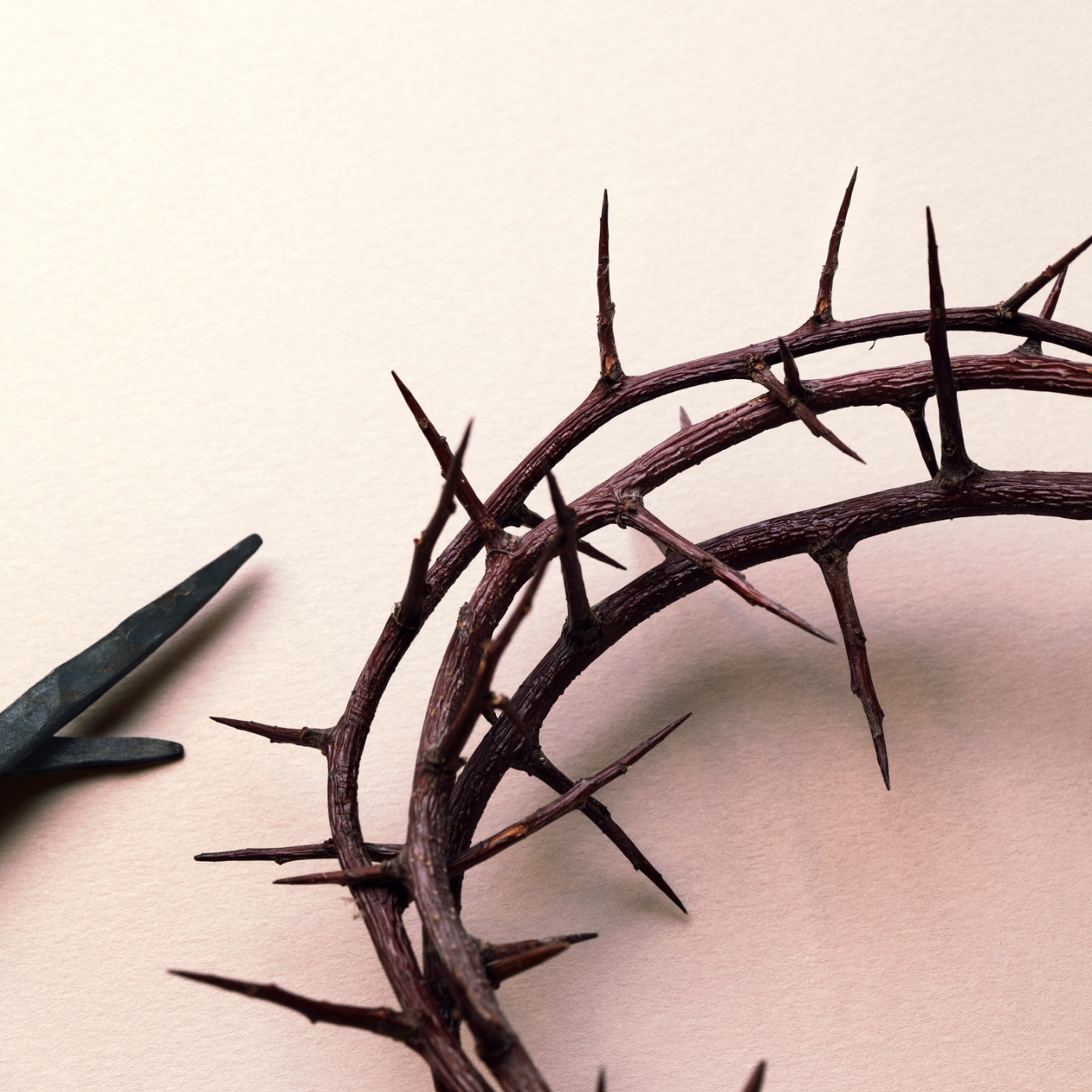
When Jesus was coronated, maybe a hundred people stood there, most of them yelling for His death. His throne was a cross. His crown was thorns. His robe was borrowed to mock Him.
And yet, read John 18–19 slowly and you can almost feel it—this is a coronation.
Pilate keeps calling Him King. The sign above His head is written in three languages so the nations can read it. Even the chief priests' protest can't change the wording: Jesus of Nazareth, the King of the Jews.
Here's what I love about that. Our King isn't far off and untouchable. He's not sitting in a palace wondering how the rest of us are getting by. He stooped. He bled. He knows what it feels like to be misunderstood, mocked, and left alone. Hebrews 4:15 says He's a high priest who sympathizes with our weaknesses.
So if life feels heavy today, remember who your King is. Not a distant monarch behind golden gates, but a Savior with scars on His hands who wore your thorns so you could wear His peace.
Bow your head. He's that close.
186 | What Kind of King Dies on a Cross?
In this message from the Thankful for the Cross series, Pastor Paul Durbin walks us through John 18–19 and invites us to see the cross not just as the place where Jesus paid our ransom, but as the place where Jesus was coronated King. Paul contrasts the pomp of King Charles III's coronation with the humble, upside-down coronation of Jesus—no cheering crowd, no gold crown, no royal chair. Just thorns, a purple robe, and a cross. Along the way, Paul unpacks four realities we have to reckon with if Jesus really is King: there are two kingdoms, not everyone wants to join His kingdom, His kingdom isn't outwardly attractive, and His kingdom wins. It's a compelling call to stop living with one foot in each kingdom and surrender fully to King Jesus.